What Building 40+ Websites Taught Me
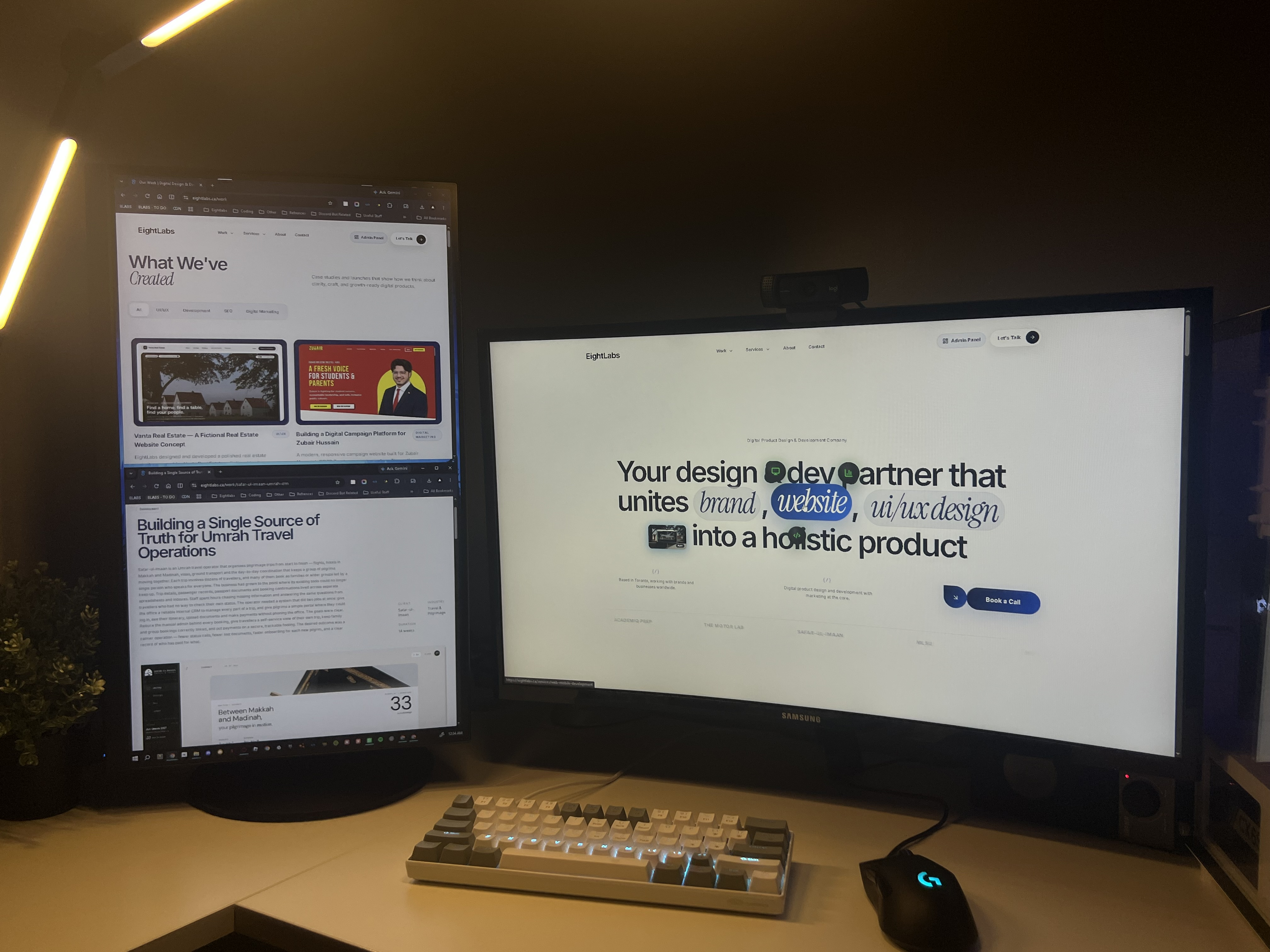
When I first started building websites, I thought the hardest part would be the actual development.
I assumed that if I could make something look good, work properly, and load fast, then I had basically figured it out.
After working on more than 40 websites, I realized the development is only one part of it.
Every project teaches you something different. Some clients know exactly what they want. Others have a rough idea but need help turning it into something clear. Some projects move quickly. Others change direction multiple times before they are finished.
Over time, I started noticing the same lessons coming up again and again.
A Good Website Is Not Just About Design
A website can look amazing and still not do its job.
The first thing I learned is that design only matters if it supports the actual goal of the site.
For some businesses, that means getting more calls. For others, it means generating leads, taking bookings, selling products, or simply building trust.
That changed the way I approached projects.
Instead of starting with, “What should this website look like?” I started thinking more about, “What does this website need to accomplish?”
Once that is clear, the design decisions become much easier.
Clients Do Not Always Know What They Want
This is probably one of the biggest lessons I learned.
A client might tell you they want something “modern,” “premium,” or “clean,” but those words can mean completely different things to different people.
You cannot always rely on vague descriptions.
I learned to ask better questions, request examples, understand the business, and figure out what they actually mean before building too much.
That saves a lot of time.
It also makes the final result much stronger because the website is based on something more specific than a few general words.
Communication Can Make or Break a Project
A project can be technically perfect and still feel messy if communication is bad.
When working with multiple clients, communication becomes just as important as development.
Clients want to know what is happening.
They want to understand timelines, updates, delays, and next steps.
I learned that being clear early on prevents a lot of problems later.
If something is going to take longer, say it.
If a request is outside the original scope, explain it.
If you need content or images from the client, make that obvious.
Good communication usually makes everything else easier.
Scope Creep Is Very Real
One small change can quickly turn into five.
Then those five changes turn into another page, another feature, or another round of revisions.
At first, I would usually just do it.
I wanted clients to be happy, so I would keep adding things without thinking much about the time it was taking.
Eventually, I realized that this is not sustainable.
You have to be flexible, but you also need clear boundaries.
Now I pay much more attention to what was originally agreed on and what counts as additional work.
That protects both sides because expectations are clearer from the beginning.
Simpler Is Usually Better
When I first started, I sometimes tried to make websites too complicated.
More animations.
More sections.
More effects.
More features.
After building more projects, I started appreciating simplicity a lot more.
Most users do not care how technically impressive a website is.
They care about whether they can understand it.
Can they find what they need?
Can they contact the business?
Can they trust the company?
Can they use the site easily on their phone?
A simple website that answers those questions well will usually perform better than one that is overloaded.
Mobile Matters More Than You Think
This is something that becomes obvious very quickly when you work on real projects.
A website might look perfect on a desktop and completely fall apart on a phone.
And for many businesses, a huge percentage of visitors are coming from mobile devices.
That means mobile cannot be something you fix at the end.
It has to be considered from the beginning.
Spacing, text size, buttons, images, navigation, and loading speed all matter.
I now think about the mobile experience while I am building, not after.
Every Business Needs Something Different
One of the biggest mistakes you can make is treating every website the same.
A restaurant does not need the same type of site as a contractor.
A campaign website does not need the same structure as a training company.
A nonprofit does not need the same user experience as an e-commerce store.
Working across different industries taught me to stop forcing the same layout or strategy onto every project.
The website should match the business.
Systems Matter More as You Grow
When you only have one or two projects, you can keep everything in your head.
Once you have many projects running at the same time, that stops working.
I learned that systems become more important as the workload grows.
Project tracking, client notes, revision lists, content collection, analytics, domains, hosting, and maintenance all need to be organized somehow.
A lot of the tools and systems I use now came from experiencing problems first.
Something gets missed once, and then you build a process to make sure it does not happen again.
You Get Better by Shipping
There is a point where you have to stop overthinking and actually finish the project.
Every website I built gave me something new to improve on.
Some taught me more about design.
Some taught me more about performance.
Some taught me how to communicate better.
Some taught me exactly what not to do.
You do not learn all of that by watching tutorials.
You learn it by building, launching, making mistakes, fixing them, and doing the next project better.
What I Think About Differently Now
After building more than 40 websites, I do not really see websites as just design or code anymore.
I see them as part of a business system.
The website has to communicate clearly, build trust, make things easier for the user, and support whatever the business is trying to achieve.
The development still matters.
The design still matters.
But they only work when everything else around them makes sense.
That has probably been the biggest shift in how I approach projects.
And I am sure that after another 40 websites, I will look back and realize there is still a lot more to learn.